
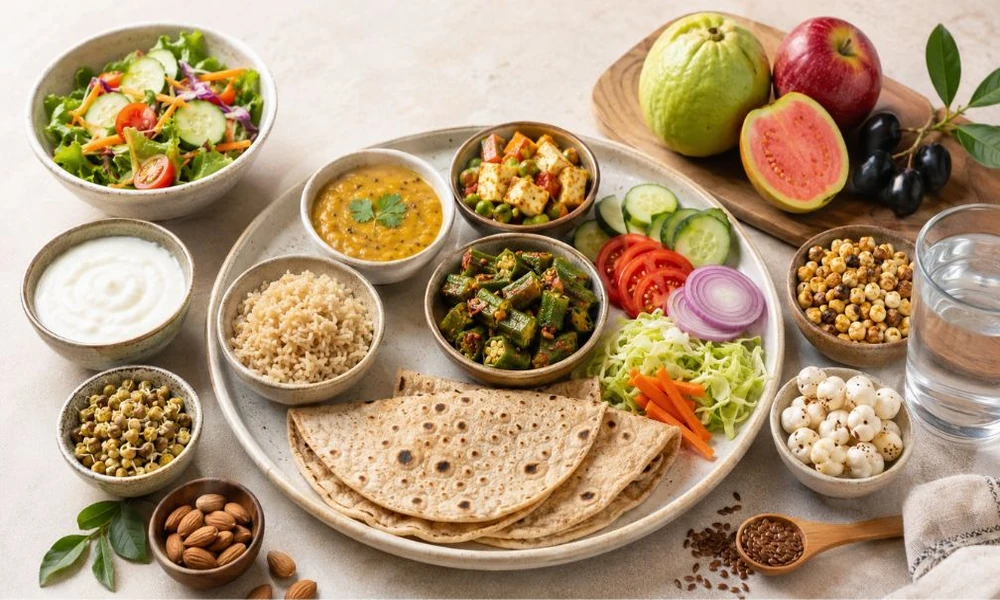
A diabetes meal plan does not have to be a long list of banned foods. It should help the person eat satisfying meals while managing carbohydrate, energy intake and overall nutrition. A review of lifestyle intervention for type 2 diabetes found that structured food and activity programmes can improve glucose-related outcomes, although the most suitable approach depends on the individual and local food habits.
A simple visual method is to divide the plate into three parts. About half can contain non-starchy vegetables. Examples include leafy vegetables, beans, gourds, cauliflower, cabbage, brinjal, tomato and cucumber.
About one quarter can contain protein. Suitable options may include dal, sprouts, beans, paneer, tofu, plain curd, eggs, fish or chicken. The best choice depends on dietary preference, kidney health and other conditions.
The remaining quarter can contain a measured carbohydrate. This may include rice, roti, millet, oats, potato or another staple. Whole grains may provide more fibre, but portion size still matters.
Dal and beans contain both protein and carbohydrate. Milk, curd and fruit can also contribute carbohydrate. A person should consider the complete meal rather than counting only rice or roti.
Cooking style makes a difference. Deep frying, large amounts of oil, cream, sugar and heavy gravies can add substantial energy even when the main ingredient appears healthy.
Sugary drinks deserve special attention. Soft drinks, sweet tea, packaged juice, flavoured milk and energy drinks can raise glucose quickly. Water and unsweetened drinks are generally better daily choices.
Meal timing should match the person’s medicines. Skipping breakfast or delaying lunch may be risky for someone using insulin or medicine that can cause low blood sugar.
A sample lunch might include vegetable sabzi, dal, salad and one or two small rotis, depending on individual needs. Another person may use a small serving of rice with vegetables, curd and a suitable protein.
Fruit can fit into many diabetes plans in measured portions. Whole fruit is normally preferred to juice. Sweets may be kept for occasional planned use rather than eaten automatically after every meal.
Family members can eat the same basic meal. The person with diabetes does not always need a separate dish. The main differences may be portion size, cooking method and the balance between vegetables, protein and carbohydrate.
Readers looking for supervised support can review Madhavbaug’s diabetes management programme. More information about its wider health services is available through Madhavbaug.
A qualified dietitian or clinician should personalise the plan for people using insulin, living with kidney disease, trying to gain weight or managing other medical conditions.